Some of what we’ve been building over the past month.
EIS, but cleverer
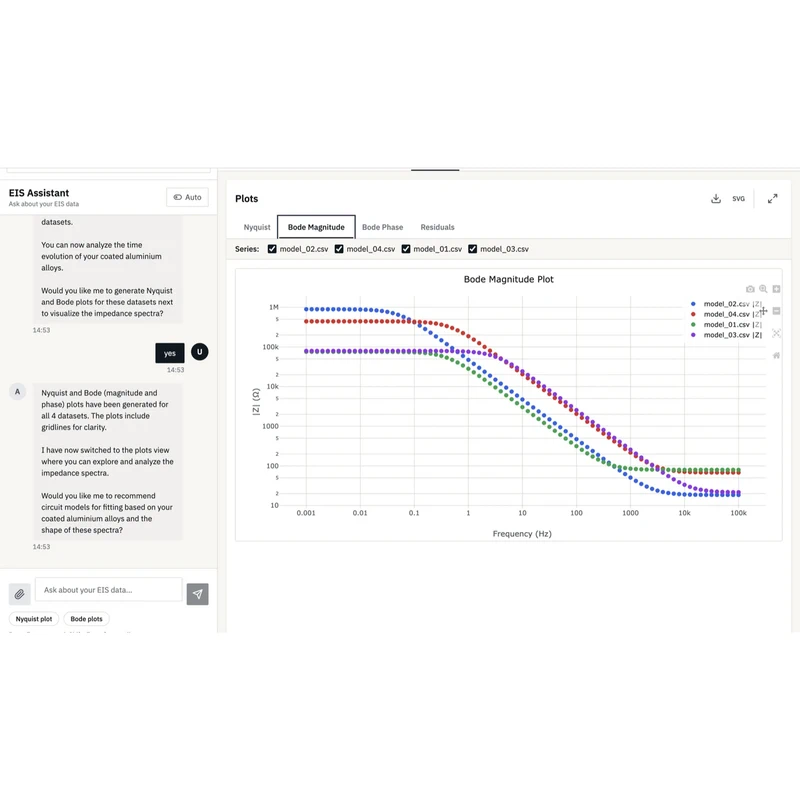
We're working on the next version of our impedance tool, and the change that matters is interpretation.
More
Instead of handing you a fitted circuit and leaving you to make sense of it, it reads the shape of the spectrum and tells you what that shape is saying about the coating and the metal underneath. From numbers to meaning.
We're working on the next version of our impedance tool, and the change that matters is interpretation. Instead of handing you a fitted circuit and leaving you to make sense of it, it reads the shape of the spectrum and tells you what that shape is saying about the coating and the metal underneath. From numbers to meaning.
Watching a tensile specimen through the whole test
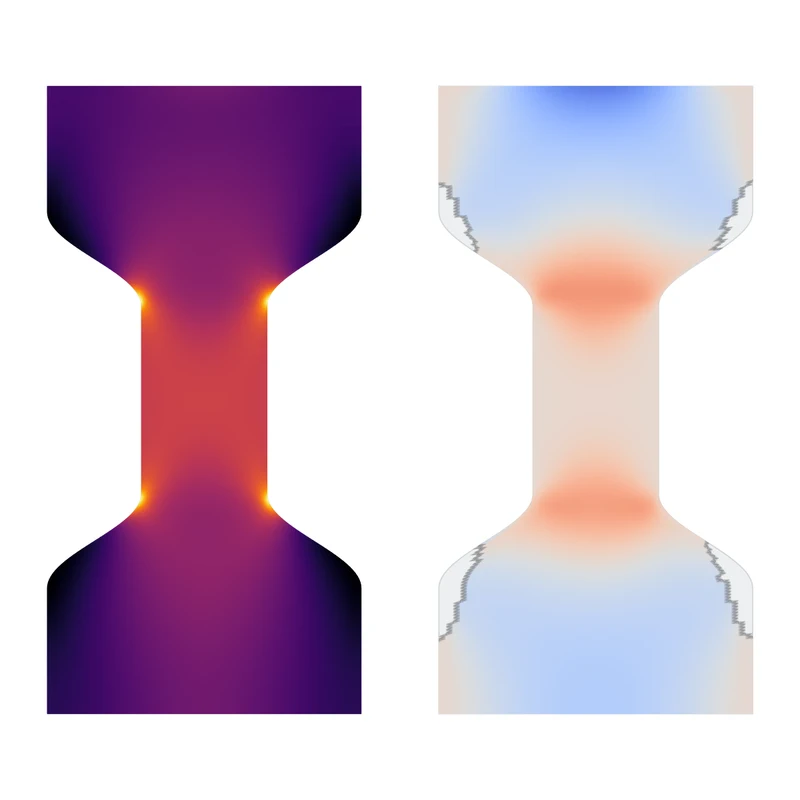
We used AI to compute how the von Mises and triaxiality fields evolve during a slow strain rate test, rather than looking at a single snapshot.
More
Below yield the most hydrostatic point sits at the shoulder, not in the gauge — and hydrostatic tension is where hydrogen likes to accumulate, which is what makes it matter for sulphide stress cracking.
We used AI to compute how the von Mises and triaxiality fields evolve during a slow strain rate test, rather than looking at a single snapshot. Below yield the most hydrostatic point sits at the shoulder, not in the gauge — and hydrostatic tension is where hydrogen likes to accumulate, which is what makes it matter for sulphide stress cracking.
Pumps for places normal pumps can't go
Using AI to design pumps for difficult conditions, where a conventional pump won't do the job — and to do the engineering, not just the sketching.
More
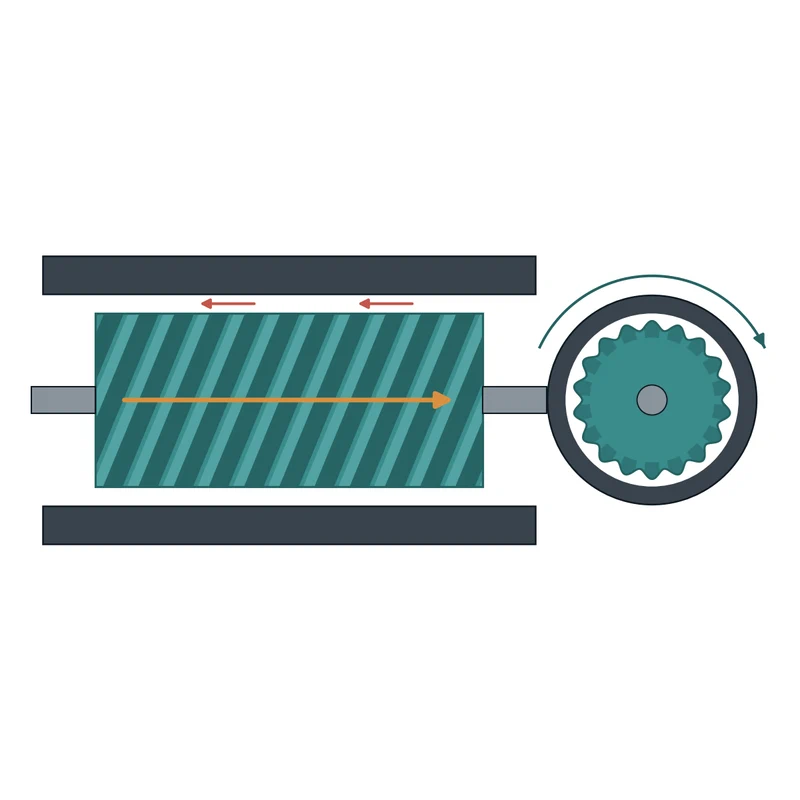
Idea to calculation to verdict, quickly, over several architectures from first principles. The grooved-rotor “rigatoni” below is one we drew, worked through, and set aside. The ones you reject are half the story!
Using AI to design pumps for difficult conditions, where a conventional pump won't do the job — and to do the engineering, not just the sketching. Idea to calculation to verdict, quickly, over several architectures from first principles. The grooved-rotor “rigatoni” below is one we drew, worked through, and set aside. The ones you reject are half the story!
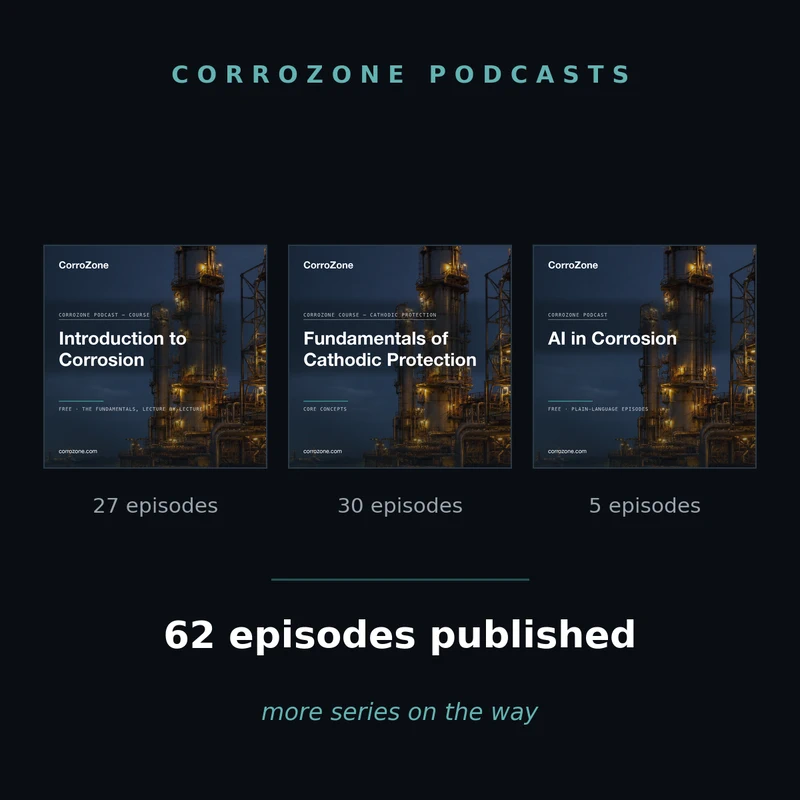
62 podcast episodes
Our audio library now stands at 62 published episodes: 27 on Introduction to Corrosion, 30 on Fundamentals of Cathodic Protection, and 5 on AI in Corrosion.
Our audio library now stands at 62 published episodes: 27 on Introduction to Corrosion, 30 on Fundamentals of Cathodic Protection, and 5 on AI in Corrosion. More series are on the way.
Both call a live model; each one explains itself below.
One agent, deterministic tools, knowledge written in plain English, and guards that check the output.
What this shows: the model does the guessing, plain code does the counting.
Demo 1 — The model guesses, the tool counts.
This is the live version of the first example from the talk. Describe a city without naming it and press Run. A language model reads your description and guesses the city — open-ended inference from world knowledge, which is what a model is good at. Then a few lines of ordinary code count the letters in the model’s answer — a deterministic step we never ask the model to do, because code does it exactly, every time. Blue panel = the model’s judgement (and, for awkward cases, the written rule it applied); green panel = the tool’s arithmetic.
City Letter Counter
demo
The model guesses the city · the code counts its letters.
What this shows: say what you want in plain words — an agent interprets it, another acts, a deterministic check decides.
Demo 2 — Act, observe, correct: the agentic loop.
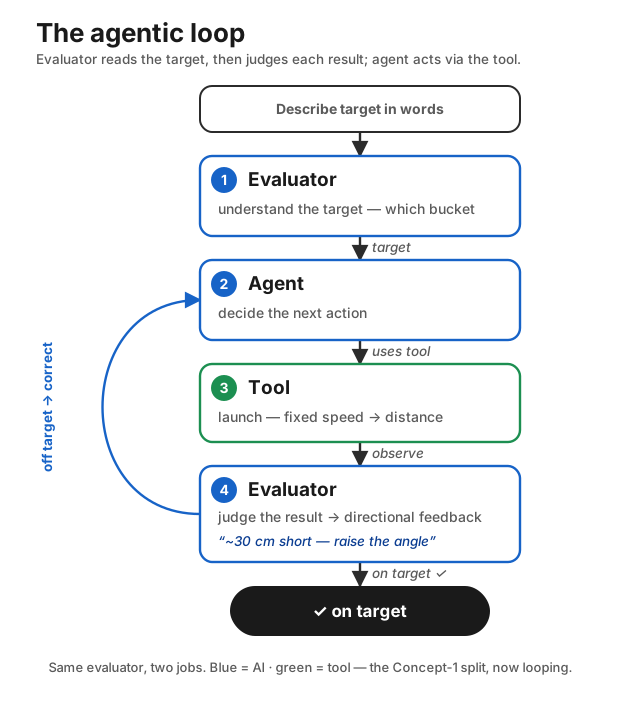
The second example from the talk, live. There are three plates on the floor, a TV, a plant and a lamp. Describe the plate you want hit any way you like — “the one nearest the TV”, “the narrow one”, “the plate between the TV and the plant” — the system reads the scene and works out which plate you mean, then says so. Nobody gives it a coordinate. From there a blindfolded “thrower” agent, which never sees the scene, chooses a launch angle; deterministic physics flies the ball; a sighted “observer” agent looks at the picture and reports, in words, whether the throw fell short or long; the thrower adjusts and throws again, up to six times. Two things to watch: the loop closes without anyone doing the maths — act, observe, correct — and the final verdict is not the observer’s opinion: a deterministic check decides whether the ball really landed on the plate, and when the observer gets it wrong the page says so (“guard caught it”). Same pattern we use on impedance data: you state the goal in your words, the model interprets and proposes, tools compute and check.
The thrower thinks…
text-only · blindfolded
Waiting to start…
live
try:
statusReady
throw0 / 6
The observer says
vision · sees the rendered scene
Waiting to start…
The demo as we run it in the talk.The same loop, drawn: act, observe, correct.