
Applied AI for corrosion teams. Turn corrosion data into decisions. Faster.
Analyse your data. Revisit your archives. Build AI tools your team can use.
How it works
Bespoke engagements
We apply AI to a defined problem on your data and hand over an auditable result — or we build a custom AI tool, shaped around your data and workflows, that your team uses going forward.
Read about the methodology →Open demos
Working demos of methodology you can break before any engagement. The Experts Discussion runs a multidisciplinary panel on your question; Expert Creation lets you build an expert from your own sources to query or add to a discussion.
- EIS Fitting — Equivalent-circuit fits with parameter ranges and residuals — one spectrum or a full archive.
- Experts Discussion — A multidisciplinary roundtable, grounded in our knowledge or in yours.
- Expert Creation — Build an expert from your own sources — yours to query or to add to a discussion.
Corporate training
Hands-on AI literacy and AI-for-corrosion R&D, scoped to your team's specific scientific context — not generic.
Read about corporate training →What we do
Analyse new and historical data
AI tools analyse and re-analyse corrosion data — new captures, existing studies, archived experiments — far faster and at lower cost than traditional manual workflows. That cost drop opens questions you'd otherwise leave on the shelf.
Field data, inspection reports, lab data — new, existing, or historical.
Shorten development cycles
Cheaper, faster analysis means tighter try/test cycles on materials and treatments — and knowledge compounds as results accumulate across projects, instead of being trapped in one engineer's head or one stranded report.
Try EIS Fitting →Build AI tools tailored to your workflows
Custom AI tools shaped around your data and workflows, handling the mechanical analysis work so your team can focus on judgement, interpretation, and the questions that move the science forward.
Read the bespoke methodology →About the science.
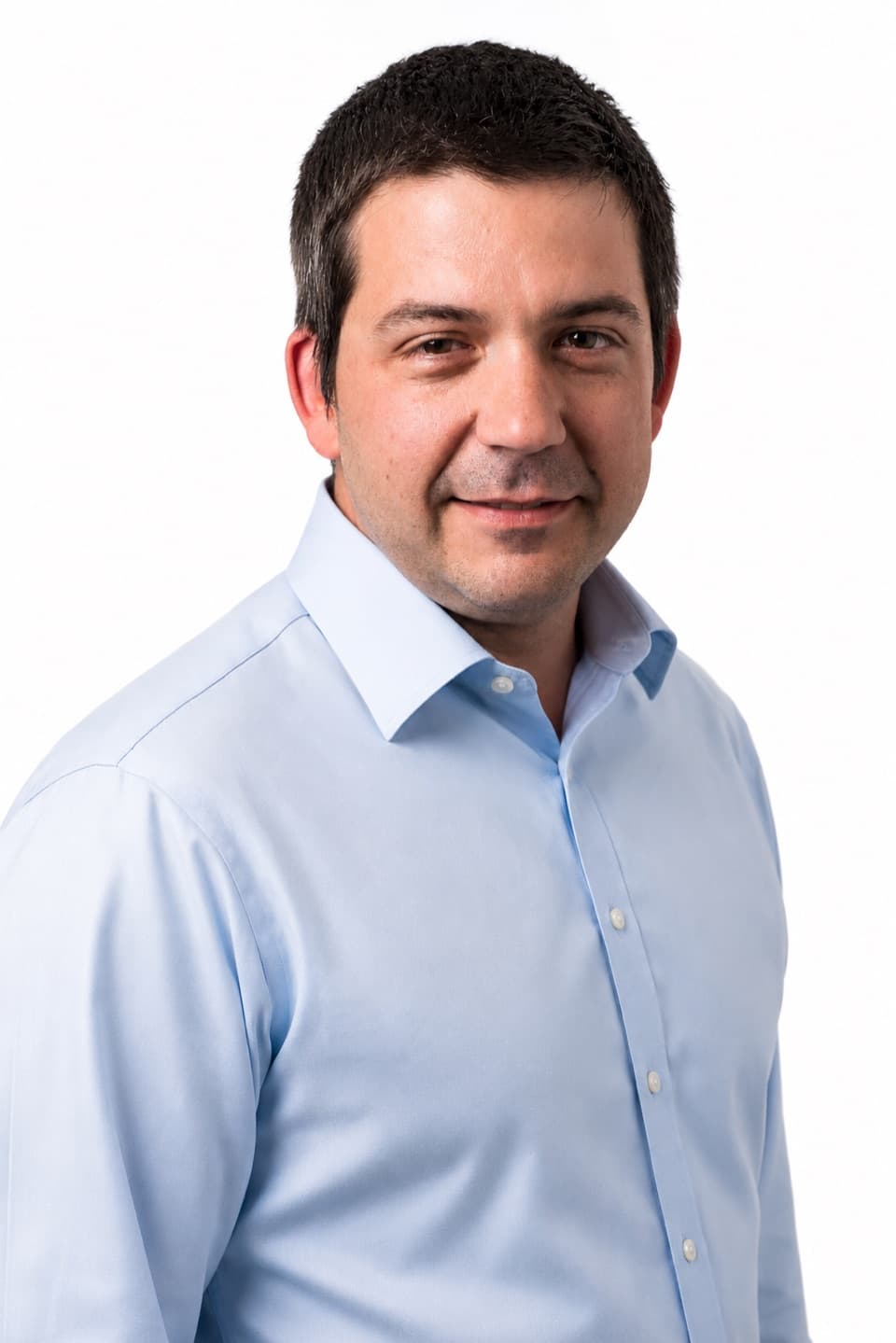
Founded by Michele Curioni, a corrosion scientist with over 150 publications in the field of corrosion.
Read about the science →EIS Fitting
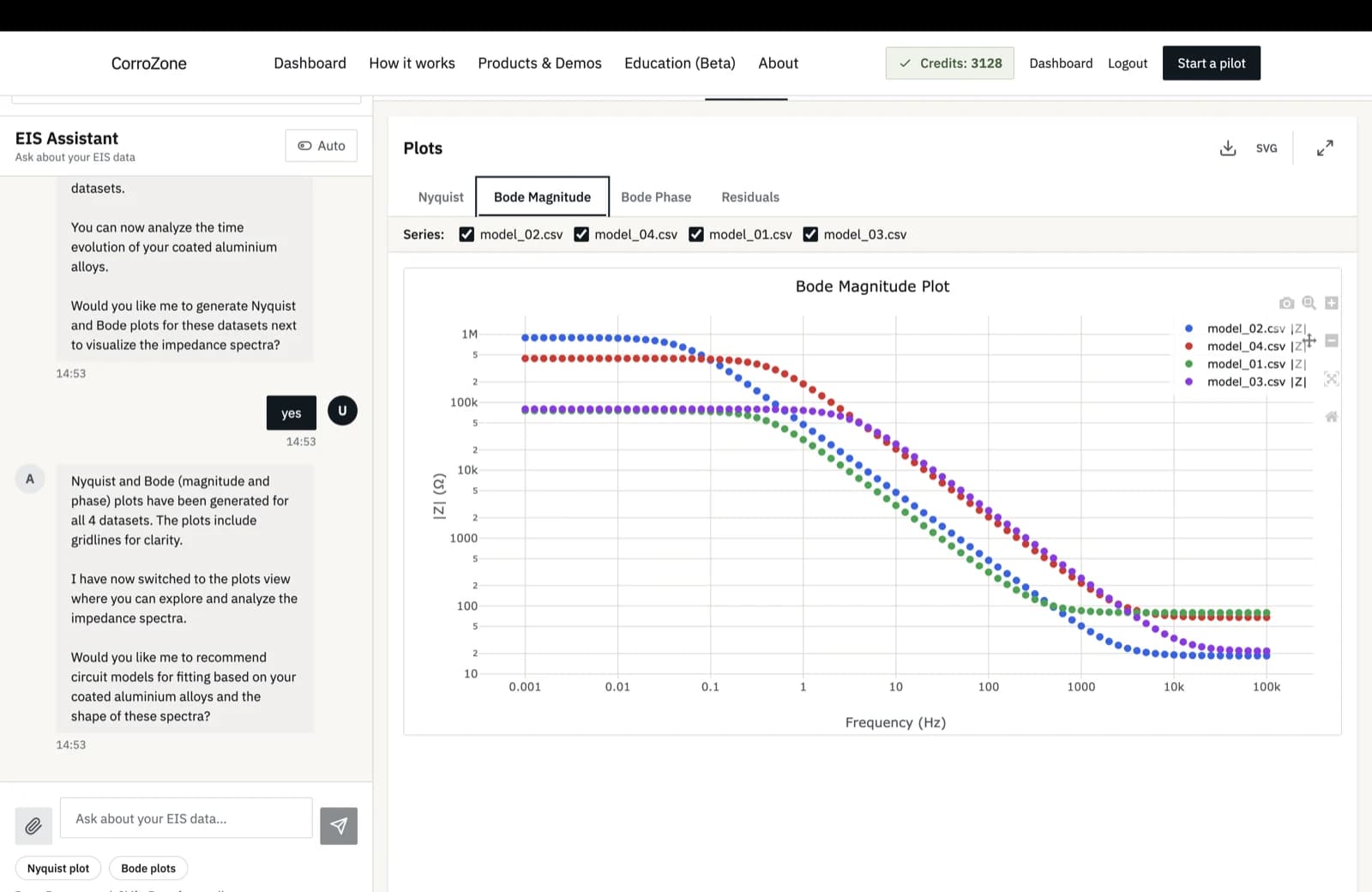
- Equivalent-circuit proposals you can accept, reject, or refine.
- Non-linear least-squares fits with parameters extracted and analysed.
- Methodology written up on /how-it-works — read before you fit.
Your spectra stay yours — see /data-handling.
Try EIS FittingOur methodology is published on /how-it-works — substantive proof you can read today, rather than a logo strip we haven't earned yet. As corporate engagements complete with permission to name them, this section will surface those instead.
Next step
No public fee; we scope per engagement on your data — see /scoped-pilot.